
When Oil Prices Rise: Why Energy Efficiency Becomes a Business Advantage
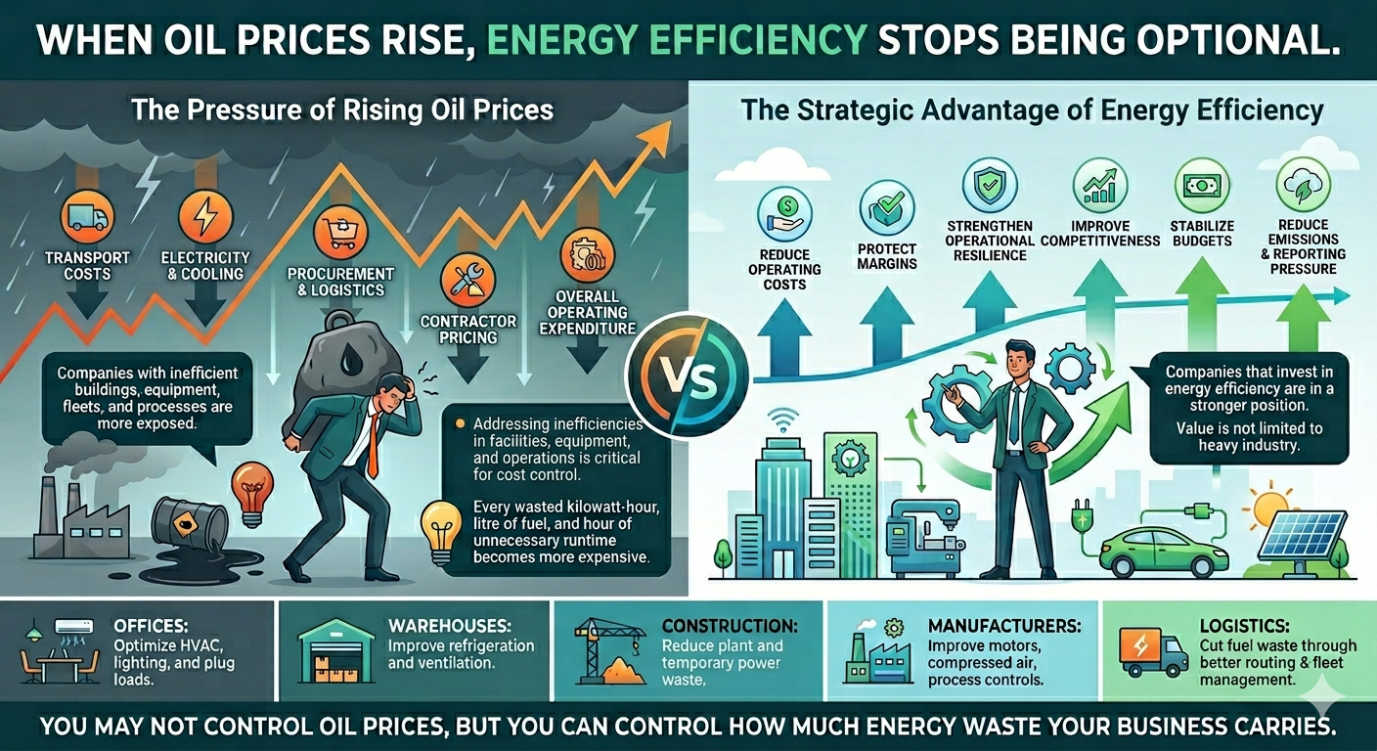
Oil price increases create immediate pressure across the business landscape. Even companies that do not buy large volumes of fuel directly still feel the impact through electricity costs, transport charges, material prices, logistics, cooling demand, contractor rates, and broader supply-chain inflation. In this environment, energy efficiency is no longer just a sustainability initiative. It becomes a practical business strategy for cost control, resilience, and stronger operational performance.
For many companies, rising oil prices expose a hidden weakness: inefficient energy use. Buildings that waste cooling, equipment that consumes more power than necessary, outdated lighting, poor maintenance practices, inefficient fleets, and weak operational controls all turn market volatility into avoidable financial loss. The companies that have already invested in energy efficiency are usually better positioned to absorb external shocks. Those that have not often find themselves reacting too late, with margins already under pressure.
The first and most obvious benefit of energy efficiency is cost reduction. When energy prices rise, every wasted kilowatt-hour, litre of fuel, or hour of unnecessary equipment runtime becomes more expensive. Efficiency measures such as LED retrofits, better HVAC controls, insulation improvements, motor upgrades, variable speed drives, fuel-use monitoring, leak detection, and smarter scheduling help reduce this waste. The result is direct savings that protect profitability when energy and fuel markets become unstable.
The second benefit is budget stability. Oil price volatility makes operating costs harder to forecast. That creates challenges for budgeting, pricing, procurement, and contract management. Energy-efficient companies are less exposed to sudden cost spikes because they need less energy to deliver the same level of output. This gives management a more stable cost base and improves decision-making in uncertain markets.
Another major benefit is improved competitiveness. When oil prices increase, companies with poor energy performance often pass higher costs on to clients, lose margin, or both. Companies with better energy performance have more flexibility. They can protect margins, hold pricing more effectively, or reinvest savings into growth, technology, workforce capability, or customer value. In practical terms, energy efficiency helps a company stay commercially agile while competitors are under pressure.
Energy efficiency also strengthens operational resilience. High fuel and energy costs often affect transport, cooling systems, production equipment, backup power, and supply chains at the same time. Businesses that optimize their energy systems are usually better prepared to manage these pressures. Efficient operations tend to be better monitored, better maintained, and better controlled. That means fewer disruptions, lower downtime risk, and stronger continuity during periods of market stress.
There is also a clear supply-chain benefit. When oil prices rise, suppliers, logistics providers, and subcontractors typically increase prices. Companies that understand their own energy profile and start engaging suppliers on efficiency can reduce the ripple effect of energy inflation. This is especially relevant in construction, manufacturing, real estate, facilities management, transport, and industrial operations, where energy costs are embedded across multiple layers of the value chain.
Beyond cost and resilience, energy efficiency supports stronger ESG and corporate reporting performance. Investors, clients, regulators, and major contractors increasingly want to see evidence that companies are managing energy, carbon, and operational risk in a disciplined way. Rising oil prices make this issue even more visible. A company that can demonstrate energy monitoring, reduction initiatives, measurable savings, and clear governance sends a stronger message to the market: it is proactive, data-driven, and prepared for transition risk.
Energy efficiency can also reduce exposure to carbon-related costs and future regulation. In many markets, businesses are facing growing pressure linked to carbon emissions, climate disclosures, efficiency standards, and sustainability requirements in tenders and financing. Lower energy use usually means lower emissions, which helps companies improve compliance readiness and future-proof their operations. In other words, energy efficiency delivers immediate cost value today while also supporting longer-term strategic positioning.
Importantly, energy efficiency is not only for heavy industry. Every company can benefit. Offices can optimize cooling, lighting, and equipment use. Warehouses can improve ventilation, refrigeration, and operating schedules. Manufacturers can upgrade motors, compressed air systems, and process controls. Construction companies can reduce fuel waste, improve temporary power management, and optimize plant usage. Retailers can improve HVAC, refrigeration, lighting, and building controls. Logistics firms can target routing, idling, and fleet efficiency. The scale of opportunity varies, but the business case is widespread.
The most effective companies do not treat energy efficiency as a one-off technical fix. They treat it as a management discipline. That means measuring energy use properly, identifying major consumption sources, prioritizing high-return actions, assigning accountability, and tracking performance over time. When oil prices rise, this structured approach allows companies to move from reactive cost cutting to strategic performance improvement.
The key message is clear: rising oil prices are a threat to inefficient operations, but they are also a catalyst for smarter business. Energy efficiency helps companies reduce costs, protect margins, strengthen resilience, improve ESG performance, and build a more competitive operating model. In a volatile market, companies cannot control global oil prices. But they can control how much waste they carry. That is where the real opportunity sits.
Companies that invest in energy efficiency early do not just save energy. They build a leaner, more resilient, and more future-ready business.