Waste management has evolved far beyond collection and disposal. It is now a strategic enabler of sustainable development, circular-economy growth, and climate-aligned urban planning. As cities expand and consumption patterns intensify, the way societies manage waste directly influences emissions, resource efficiency, and overall environmental resilience.
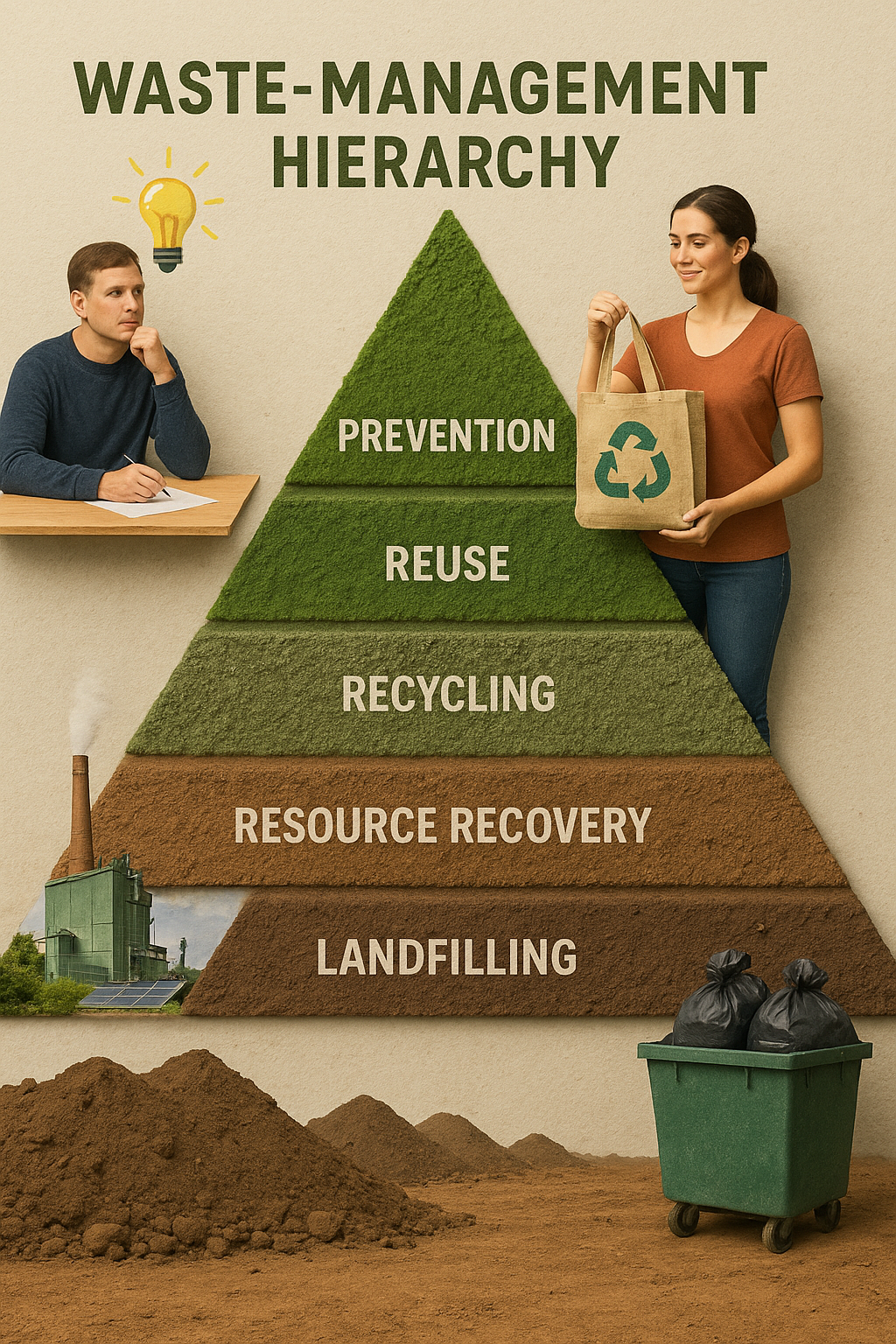
Today’s waste systems follow a structured waste-hierarchy model, shifting the focus from end-of-pipe solutions to proactive resource stewardship. This hierarchy prioritises:
- Prevention — reducing waste at the source
- Reuse — extending the life of products and materials
- Recycling — turning waste into new resources
- Recovery — capturing energy or materials before disposal
- Safe Disposal — only when no further value can be extracted
This approach conserves raw materials, reduces pressure on landfills, lowers carbon footprints, and supports the transition toward circular, low-waste economies.
The Global Shift Toward Circular Waste Systems
Across the world, governments and industries are embedding circularity into policy, infrastructure, and corporate strategy. The momentum includes:
- Mandatory material segregation and recycling requirements
- Growing investment in waste-to-energy and resource-recovery technologies
- Large-scale construction and demolition (C&D) recycling systems
- Policies that push producers toward extended responsibility and reduced plastics
Cities and organisations adopting these models are not just managing waste more efficiently—they are building future-ready systems that capture value, reduce environmental risk, and advance net-zero ambitions.