Beneath the water-logged surface of a common swamp lies an ancient secret. We often overlook these murky landscapes, dismissing them as wasted space or “the bog.” But these are peatlands—the Earth’s most effective, yet invisible, defense system. They don’t just sit there; they are active, silent guardians of our atmospheric health. To understand them is to realize that the ground beneath our feet holds the power to either stabilize our future or accelerate its undoing.
The Carbon Vaults Beneath the Surface
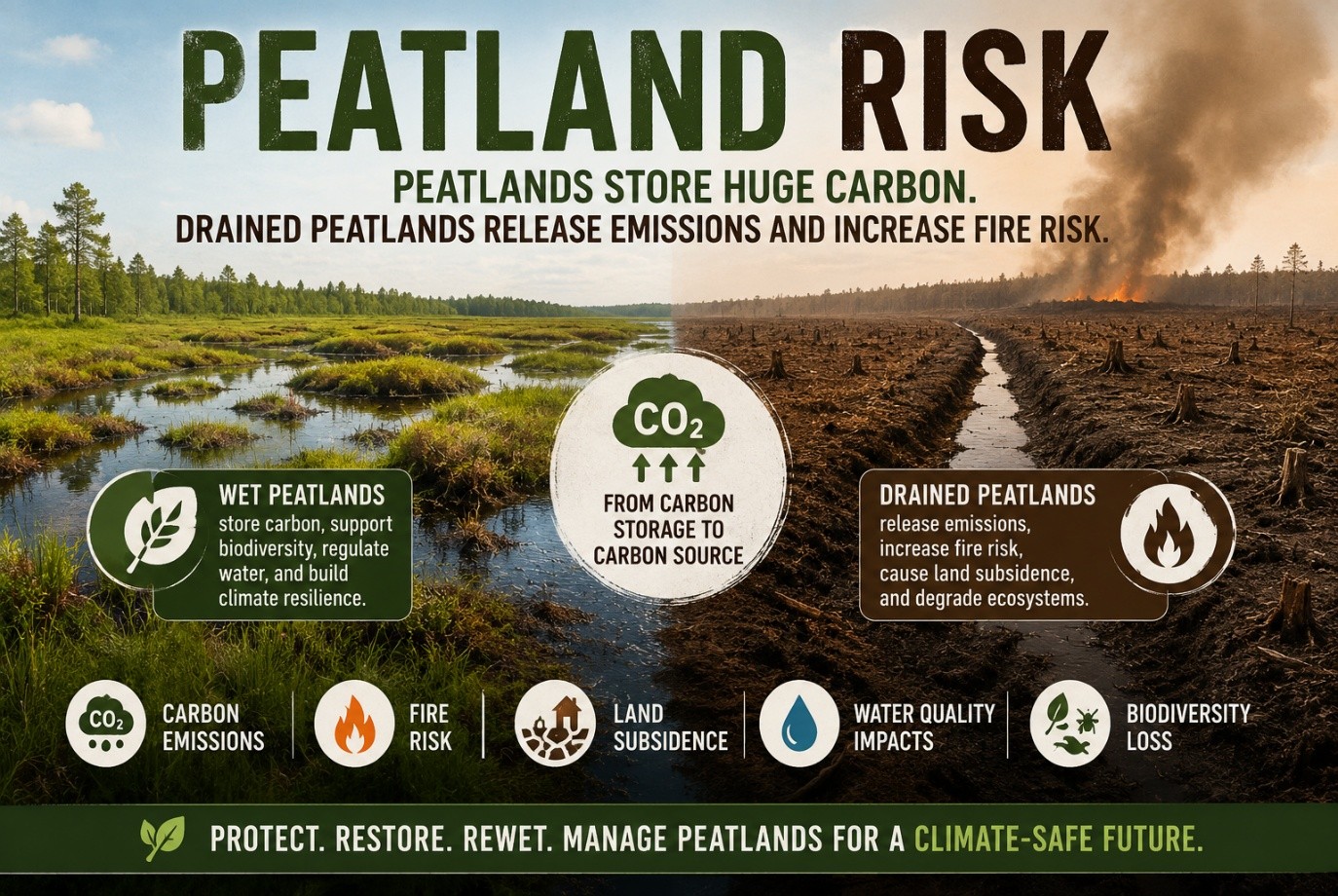
Peatlands are the heavyweight champions of carbon capture. They don’t just store carbon; they lock it away in a dense, submerged vault.
This isn’t just a local benefit. It is a foundational pillar of global environmental health.
By keeping organic matter underwater, these ecosystems prevent decomposition. The water acts as a seal, cutting off the supply of oxygen. The result? Carbon stays in the ground where it belongs.
“Peatlands Store Huge Carbon”
This storage capacity is staggering. It acts as a global anchor for climate stability. As long as these vaults remain sealed, they are our greatest natural asset. However, the security of this vault is more fragile than it appears.
The Drainage Paradox
The moment we intervene, the vault cracks. Drainage—often for agriculture or development—strips away the protective water layer and exposes the buried carbon to oxygen. This single act of human engineering triggers a catastrophic reversal. It turns a millennia-old carbon sink into an active, leaking climate risk. There is a profound, tragic irony here: in our attempt to “improve” the land for human use, we dismantle a natural solution and manufacture a massive man-made liability. What was once a shield against warming becomes a primary driver of it.
Why This Matters for our Future
From a strategic perspective, peatlands represent a high-stakes “Value-at-Risk” scenario. The utility of these landscapes is essentially binary. They are either a high-performing environmental asset or a compounding atmospheric liability. There is no middle ground. Once the drainage process begins, the transition from sink to risk is swift and difficult to reverse.
Key Realizations:
- The Magnitude of Exposure: Because the initial storage is so vast, the potential “carbon debt” released upon drainage is disproportionately large compared to other ecosystems.
- A Binary State: A peatland is either working for us or against us; drainage is the mechanical switch that flips the status from benefit to burden.
- Fragile Security: Our climate stability is anchored by these landscapes, yet that security is entirely dependent on a single factor: maintaining their natural, saturated state.
A Question of Stewardship
Protecting these landscapes is not a luxury; it is a strategic necessity. We have long ignored the power of these “invisible” assets because they lack the visual majesty of a rainforest. Yet, their role in our survival is just as significant. Recognizing the thin line between a carbon vault and a climate risk is the first step toward true stewardship.
As we look to the future, we must ask ourselves: how will we change our perception of these invisible assets to ensure they remain guardians of our climate rather than risks to our future?