The LCA Tool provides comprehensive insight into the environmental impact of products, materials, systems, or projects throughout their entire life cycle, rather than focusing solely on individual stages. It functions as a strategic decision-support resource for design, procurement, product substantiation, and improvement planning.
This tool evaluates impacts across various stages, including raw material extraction, manufacturing, transportation, usage, and end-of-life processes. Such analysis offers a broader and more accurate perspective regarding the concentration of environmental burdens and identifies areas where alternative choices may enhance performance. Rather than relying on assumptions about sustainability, users can objectively compare scenarios through a structured methodology.
Its value is particularly significant when robust evidence is required for design decisions, material selection, client specifications, or sustainability assertions. The tool facilitates product development, low-carbon material strategies, procurement assessments, and enhances communication with customers, investors, and internal stakeholders.
By enabling rigorous analysis of sustainability claims, the LCA Tool supports not only reporting but also informed strategic decision-making. Emphasizing life cycle thinking helps to prevent the transfer of environmental impacts between stages. With a holistic view, organizations are empowered to make better decisions, minimize concealed environmental burdens, and achieve more credible sustainability outcomes.
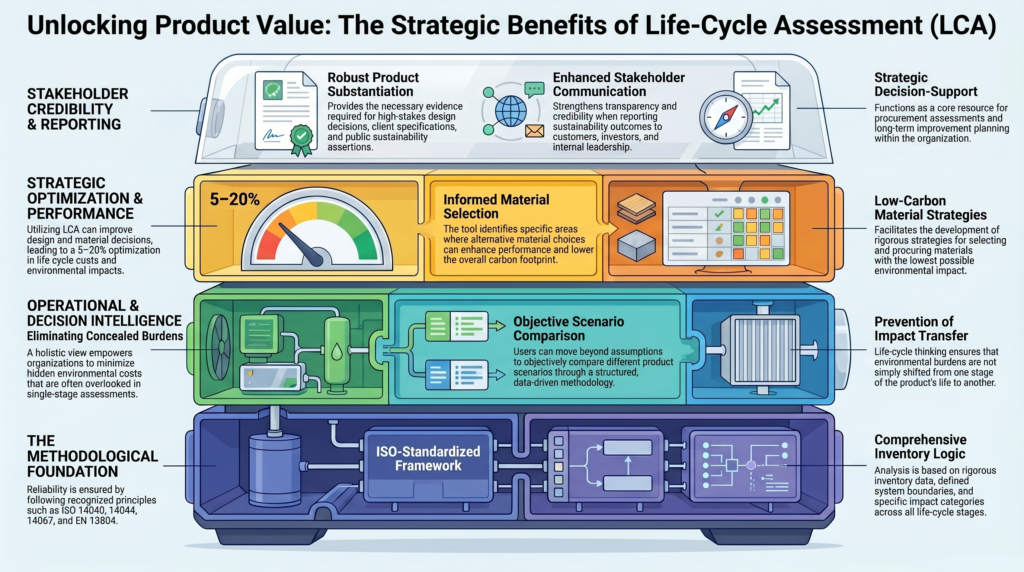
Benefits
Can improve design and material decisions, with life-cycle cost and impact optimization potential of up to 5–20% depending on alternatives assessed
Methodology
Life-cycle assessment logic based on inventory data, system boundaries, life-cycle stages, impact categories, allocation assumptions where needed, and recognized LCA framework principles such as ISO 14040/14044-style structure. Standards/frameworks: ISO 14040, ISO 14044, ISO 14067, EN 15804 where relevant.