The GHG and Carbon Footprint Tool gives you a structured way to measure greenhouse gas emissions across Scope 1, Scope 2, and selected Scope 3 categories using real activity data rather than weak assumptions. It provides the foundation for carbon visibility, target-setting, and credible transition planning.
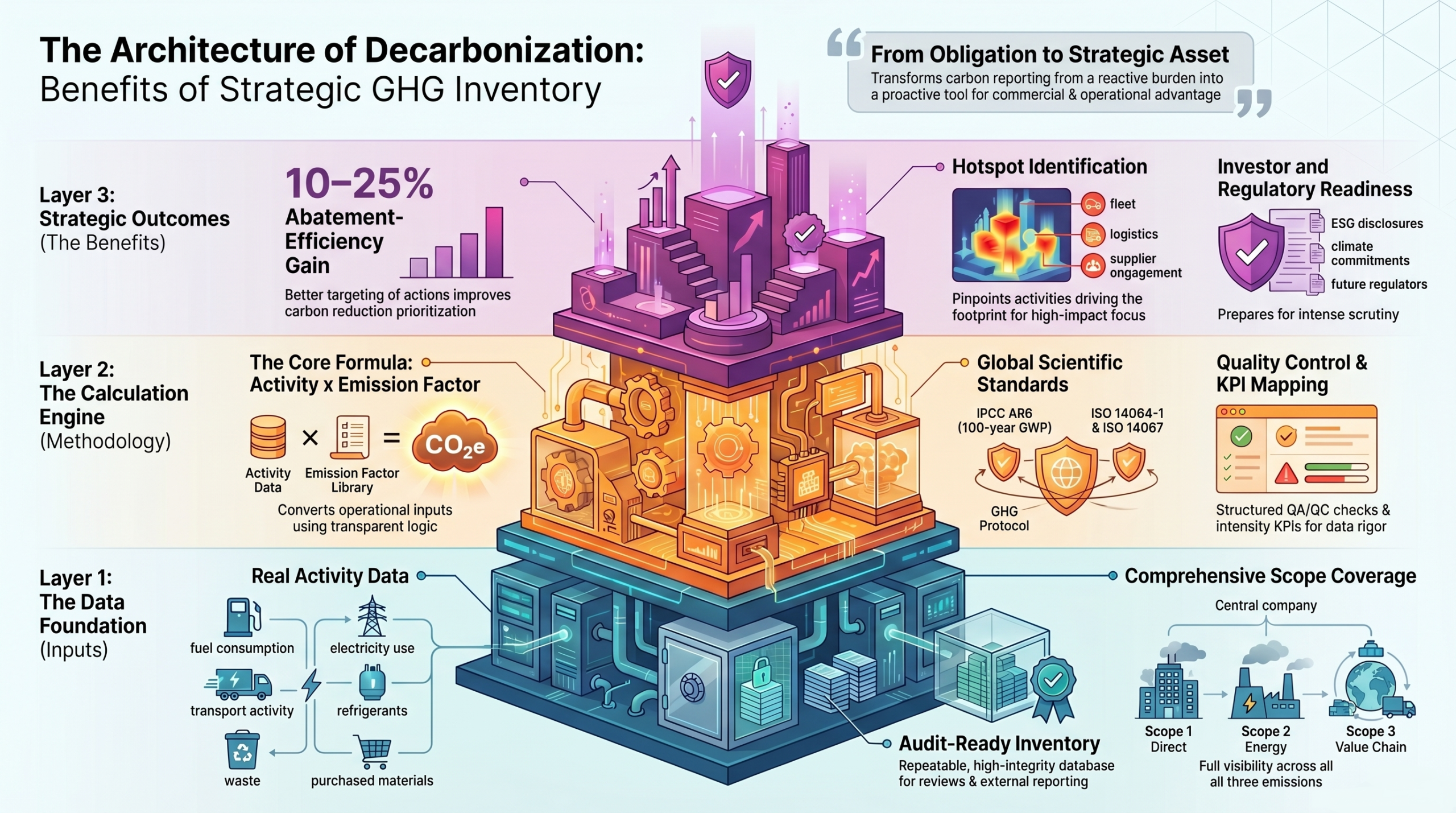
The tool takes operational inputs such as fuel consumption, electricity use, transport activity, refrigerants, waste, purchased materials, and other relevant sources, and converts them into carbon dioxide equivalent emissions using recognized emission factors and transparent calculation logic. That means you can move beyond rough estimates and build an auditable, repeatable inventory that stands up to internal review, external reporting, and future assurance requirements.
The practical value is significant. First, you can identify emission hotspots and understand which activities are driving the footprint. Second, your management team can prioritize reduction opportunities in a focused way, whether that means fleet efficiency, renewable electricity, refrigerant control, logistics optimization, or supplier engagement. Third, the organization becomes better prepared for ESG disclosures, climate commitments, investor scrutiny, and future regulatory expectations.
This tool is effective as carbon has evolved into a board-level concern. Organizations are now required to quantify emissions, articulate reduction strategies, and substantiate assertions with reliable data. By introducing rigor, this tool transforms carbon reporting from a reactive obligation into a strategic management asset, offering tangible operational and commercial benefits.
Benefits
Can improve carbon reduction prioritization and avoid inefficient spend, with abatement-efficiency gains of up to 10–25% through better targeting of actions
Methodology
GHG & Carbon Footprint Tool Calculates greenhouse gas emissions across Scope 1, Scope 2, and selected Scope 3 categories using activity data such as fuel, electricity, transport, materials, refrigerants, waste, and upstream/downstream inputs. Helps the client quantify carbon footprint, identify major emission hotspots, build reduction plans, monitor progress, and prepare disclosures, target-setting, and transition planning with a transparent audit trail. Core formula: CO2e = Activity Data × Emission Factor. Uses activity-based accounting, official or recognized emission factor libraries, IPCC AR6 100-year global warming potentials where applicable, scope mapping, intensity KPIs, and structured QA/QC checks. Standards/frameworks: GHG Protocol, ISO 14064-1, ISO 14067, IPCC AR6