The Waste and Circular Economy Tool helps you understand how materials move through operations, where waste is being generated, how it is handled, and where circular opportunities can create value. This is more than a waste register. It is a performance tool that helps you reduce disposal dependency, improve recovery, and strengthen resource productivity.
The tool tracks waste generation, segregation, storage, reuse, recycling, treatment routes, and disposal outcomes across sites, facilities, projects, and supply chains. This gives you a structured picture of what is being discarded, what is being diverted, and where process changes or vendor strategies could improve outcomes. It also supports diversion-rate analysis and identification of high-volume or high-cost waste streams.
For you, the benefits go beyond environmental optics. Better waste data can reduce cost, improve vendor oversight, support tender requirements, and strengthen evidence for sustainability reporting. Where circular initiatives are possible, the tool also helps identify reuse pathways, by-product value, material recovery opportunities, and operational changes that reduce raw material dependence.
This tool is compelling because it connects operational efficiency with sustainability performance. You are not only reducing waste; you are also unlocking business value through better material use, stronger recovery practices, and more disciplined resource management. It shifts waste from being treated as a reporting problem into a practical opportunity to improve cost control, circularity, and overall business performance
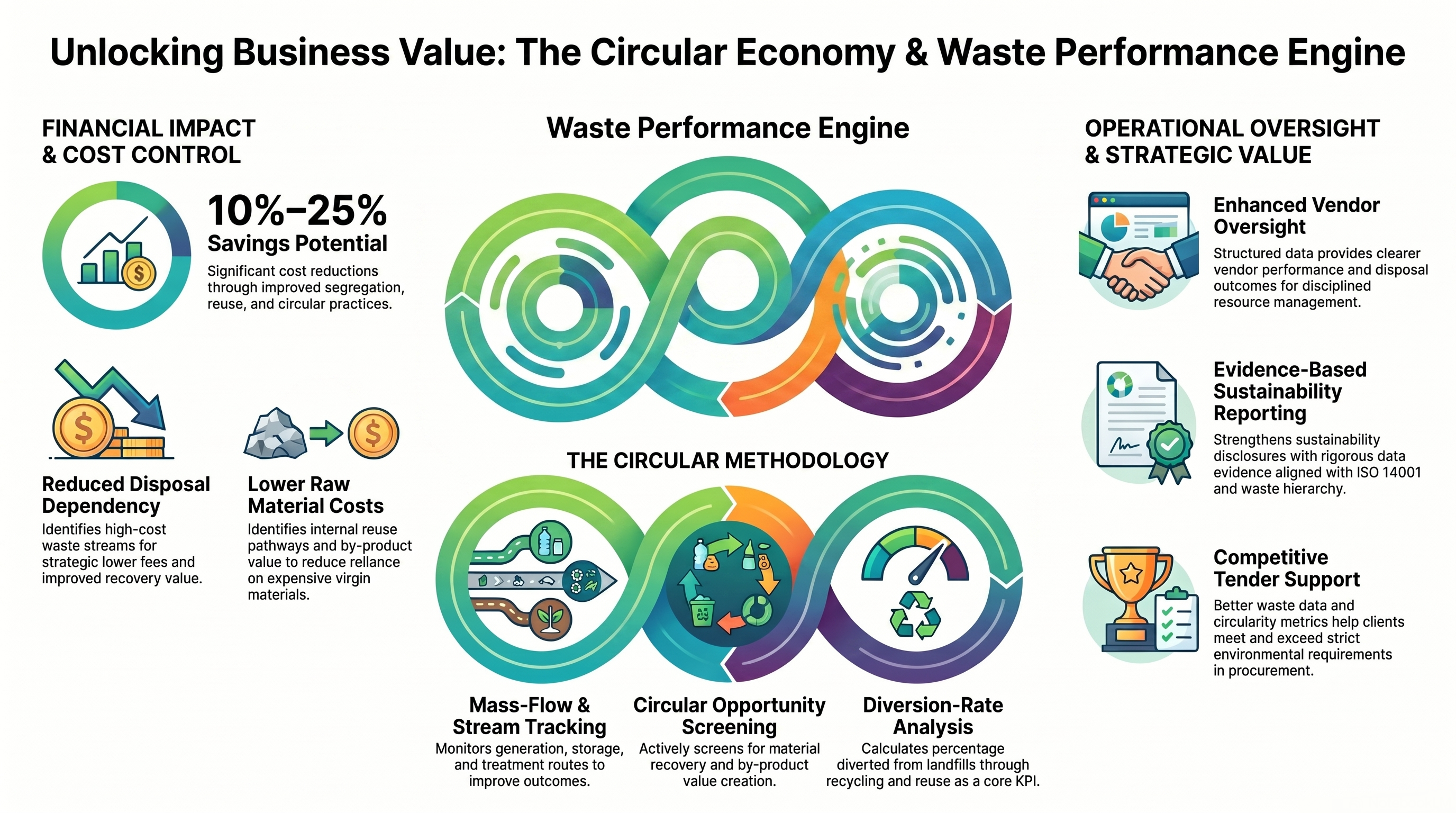
Benefits
Can reduce disposal cost and improve recovery value, with savings potential of up to 10–25% through better segregation, reuse, and circular practices.
Methodology
Mass-flow and material-stream tracking; waste hierarchy logic; diversion-rate analysis; treatment-route classification; circular opportunity screening; KPI dashboards for generation, recovery, and disposal. Standards/frameworks: ISO 14001, waste hierarchy principles, circular economy good practice.
.
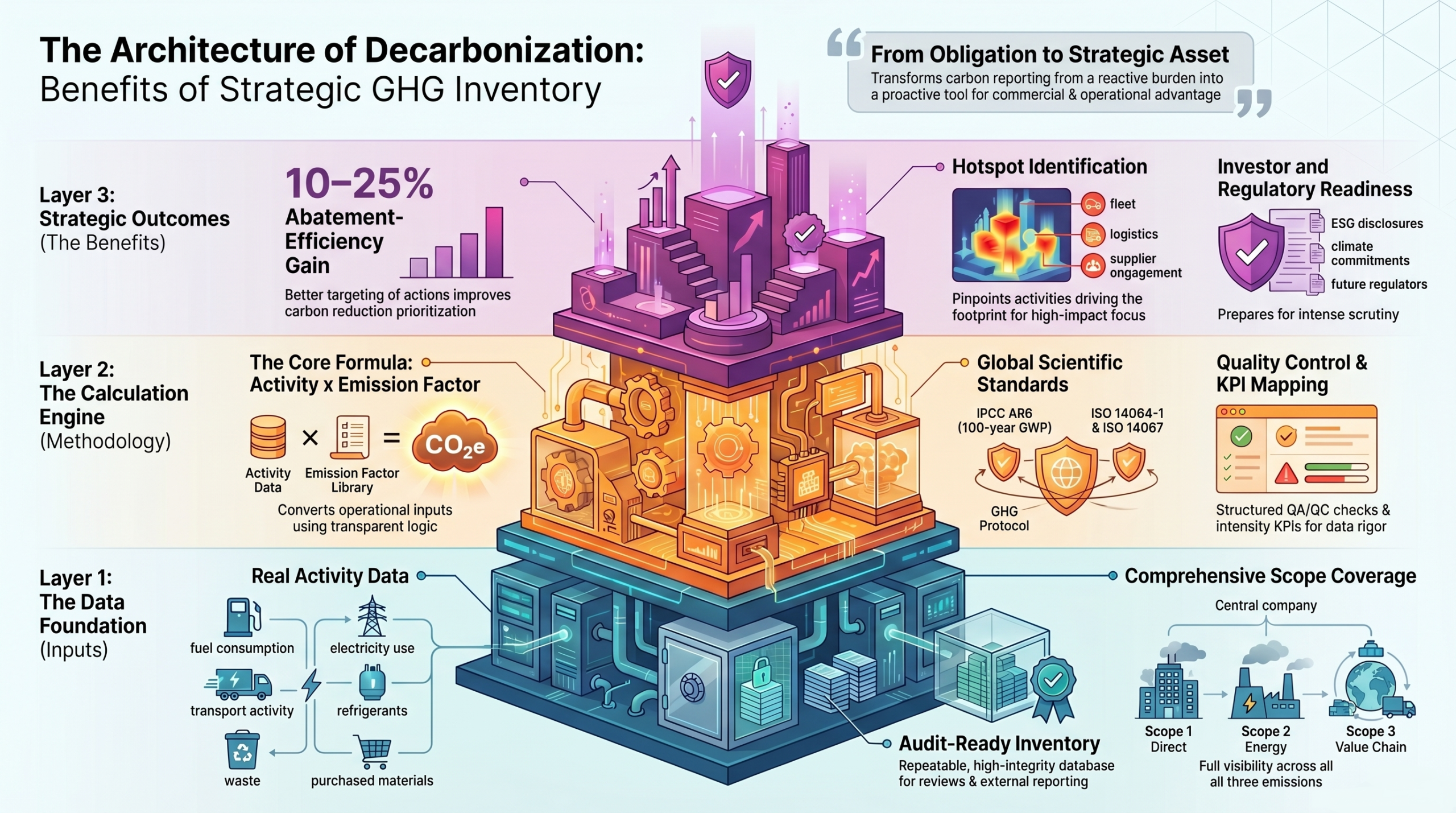
Benefits
Can improve carbon reduction prioritization and avoid inefficient spend, with abatement-efficiency gains of up to 10–25% through better targeting of actions
Methodology
GHG & Carbon Footprint Tool Calculates greenhouse gas emissions across Scope 1, Scope 2, and selected Scope 3 categories using activity data such as fuel, electricity, transport, materials, refrigerants, waste, and upstream/downstream inputs. Helps the client quantify carbon footprint, identify major emission hotspots, build reduction plans, monitor progress, and prepare disclosures, target-setting, and transition planning with a transparent audit trail. Core formula: CO2e = Activity Data × Emission Factor. Uses activity-based accounting, official or recognized emission factor libraries, IPCC AR6 100-year global warming potentials where applicable, scope mapping, intensity KPIs, and structured QA/QC checks. Standards/frameworks: GHG Protocol, ISO 14064-1, ISO 14067, IPCC AR6