The Climate Risk Management Tool helps you understand how climate change can affect assets, operations, supply chains, financing, and long-term business resilience. This is not just a sustainability discussion. It is a strategic risk discussion that converts climate uncertainty into structured decision support for leadership, operations, and investment planning.
The tool assesses both physical risks and transition risks. Physical risks include issues such as extreme heat, flooding, sea-level rise, water stress, or storm intensity. Transition risks include policy changes, carbon pricing, customer expectations, financing pressure, and market shifts. Instead of treating these as abstract concerns, the tool organizes them into risk registers, scenario views, and prioritized action plans so you can see where disruption is most likely and where resilience investment is most needed.
Commercially, this tool is highly relevant because climate risk is now influencing insurance conversations, lender expectations, project viability, and board oversight. It helps you show that climate risk is being assessed in a disciplined way rather than handled informally. It also supports adaptation planning, resilience roadmaps, and stronger governance narratives in ESG and CSRD-related reporting. The core value is that it allows you to protect continuity, reduce downside exposure, and make more informed long-term decisions in an operating environment that is becoming more volatile
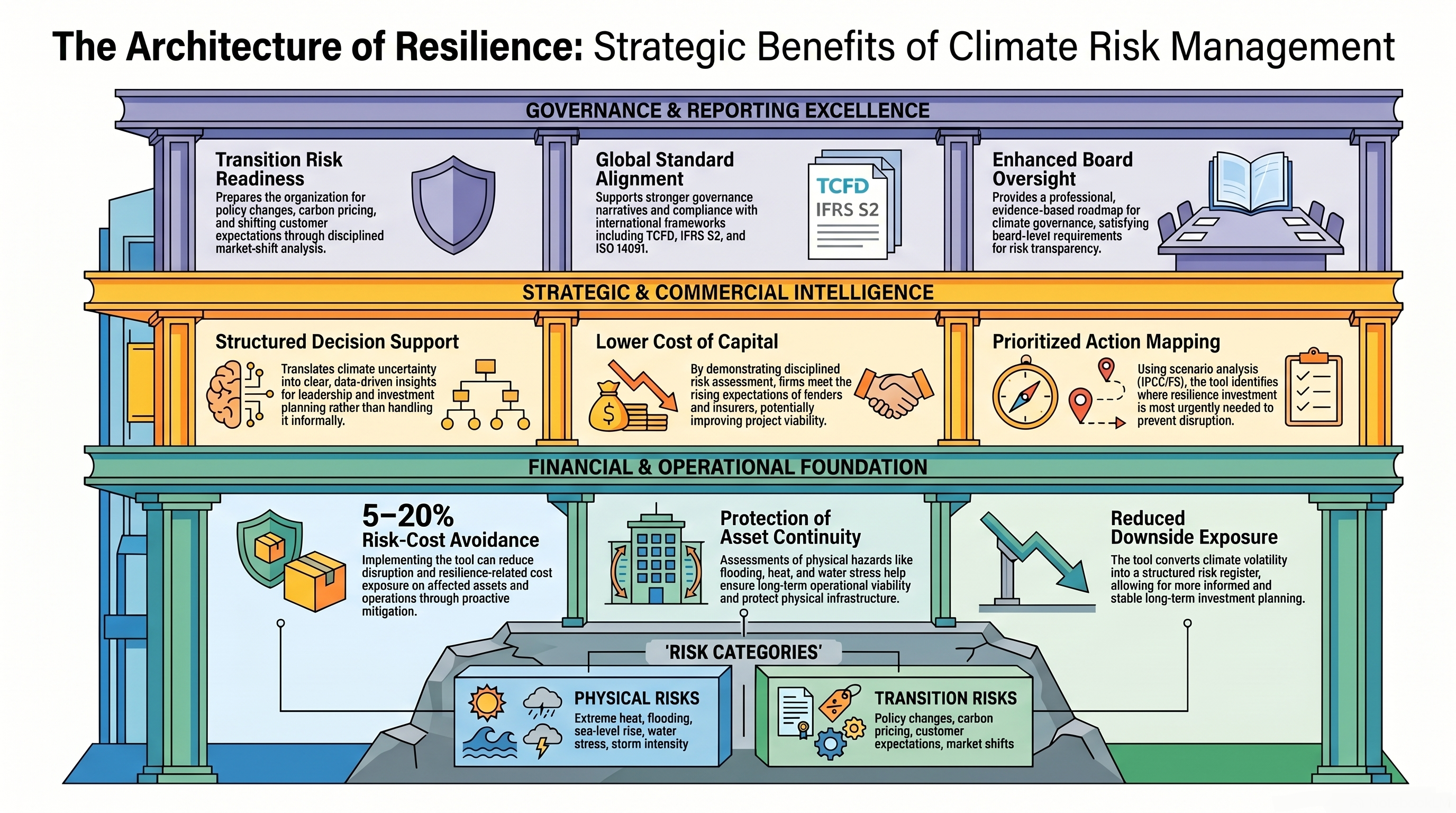
Benefits
Can reduce disruption and resilience-related cost exposure, with potential risk-cost avoidance of up to 5–20% on affected assets or operations
Methodology
Climate Risk Management Tool Assesses physical and transition climate risks affecting assets, operations, supply chains, and long-term investment decisions, with scenario-based screening of hazards such as heat, flooding, sea-level rise, policy pressure, and carbon cost exposure. Helps the client understand where climate risk can disrupt operations or increase cost of capital, prioritize adaptation measures, and support resilience planning, insurance discussions, and board-level risk oversight. Risk-based methodology using likelihood × severity scoring, physical and transition risk registers, scenario analysis informed by IPCC/NGFS-type pathways, asset vulnerability screening, action planning, and residual risk review. Standards/frameworks: TCFD, IFRS S2, IPCC scenarios, NGFS scenarios, ISO 14091.