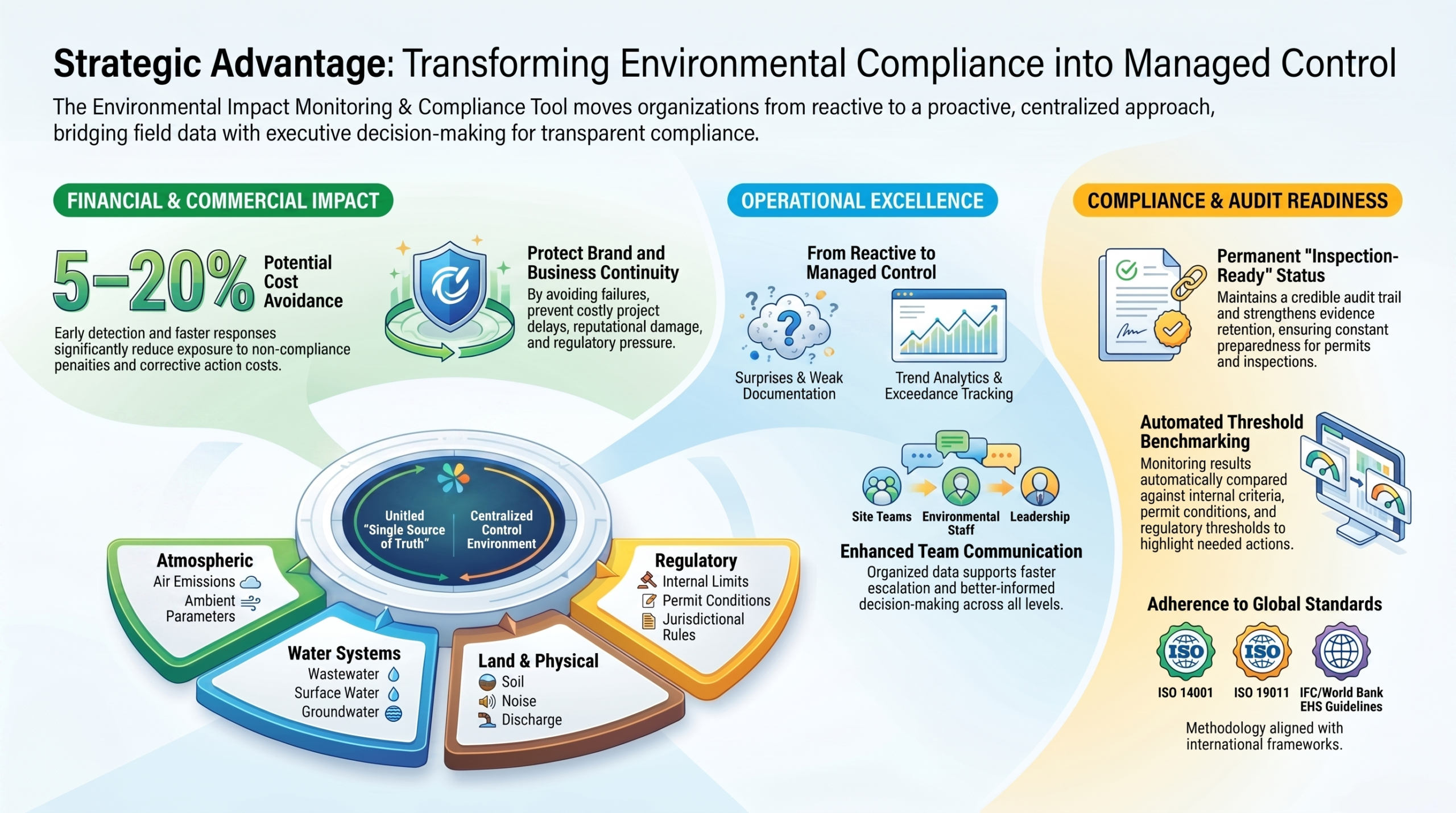
The Environmental Impact Monitoring and Compliance Tool is designed to help you stay on top of environmental performance and legal exposure by bringing monitoring data, limits, exceedances, and follow-up actions into one structured control environment. It functions as a compliance-visibility tool that reduces the chance of surprises, weak documentation, and delayed response.
The tool can consolidate data on air emissions, wastewater, surface water, groundwater, noise, soil, ambient parameters, and other monitored indicators depending on your sector and obligations. It then compares those results against applicable internal criteria, permit conditions, or regulatory thresholds. This gives management a direct view of compliance status, trend movement, and areas where exceedances or deterioration may need action.
The value is practical and immediate. The tool supports permit readiness, inspection readiness, and stronger evidence retention. It helps teams identify non-compliance risks early, respond faster, and maintain a more credible audit trail. It also improves communication between site teams, environmental staff, and leadership because the data is organized in a way that supports escalation and decision-making.
From a commercial standpoint, this tool is powerful because environmental compliance failures can lead to cost, delays, reputational damage, and regulator pressure. The solution helps you shift from reactive monitoring to managed environmental control. It is about visibility, faster response, stronger evidence, and greater confidence that environmental obligations are being managed systematically
Benefits
Can reduce non-compliance exposure and corrective-action cost, with potential cost avoidance of up to 5–20% through earlier detection and response.
Methodology
Monitoring-and-compliance methodology using parameter registers, sampling/event logs, threshold and limit libraries, exceedance analytics, trend review, corrective action tracking, and jurisdiction-specific rule mapping. Standards/frameworks: ISO 14001, ISO 19011, IFC/World Bank EHS Guidelines where applicable, local permit and regulatory limits