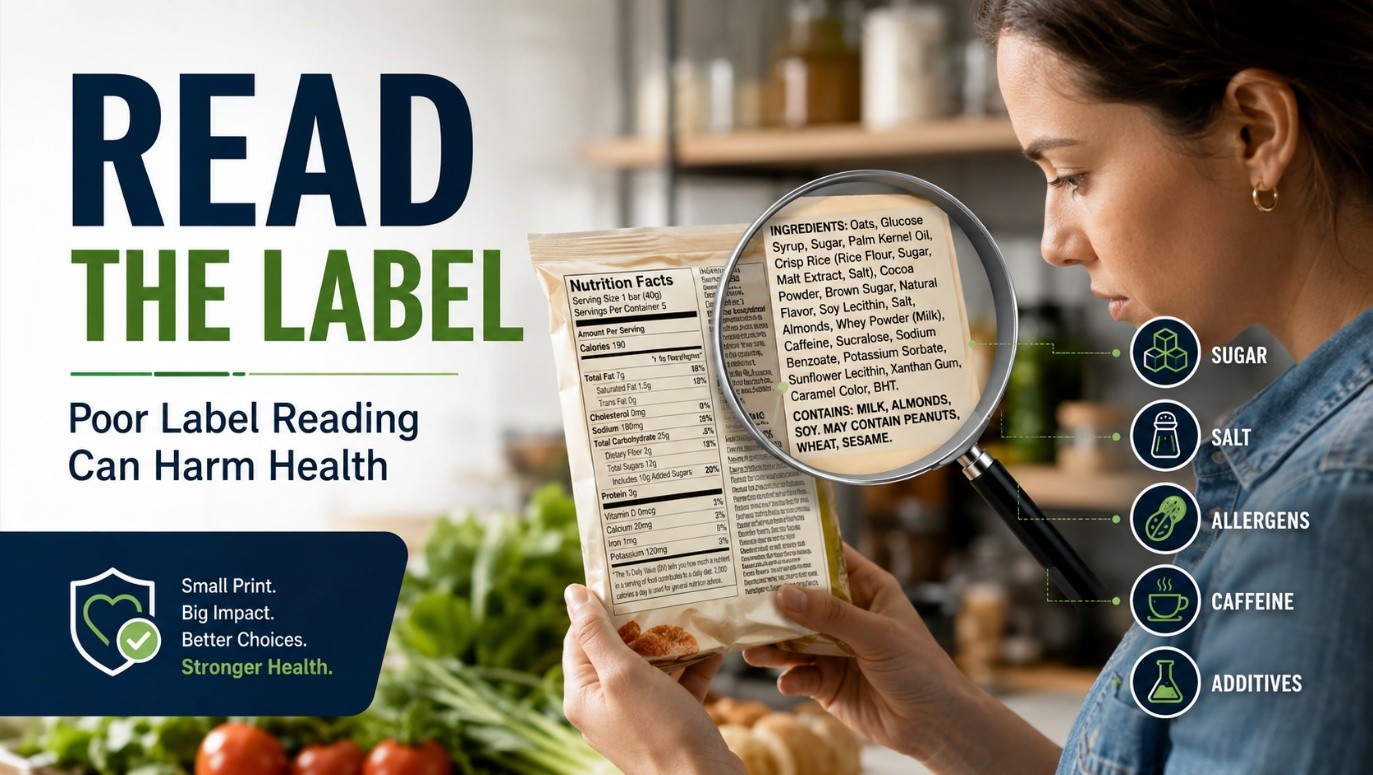
1. Introduction: The Secret Language of Food Packages
Food packaging is a tale of two sides. The front of the package is a high-powered marketing tool designed to “sell” a product using enticing buzzwords like “natural,” “healthy,” or “energy.” However, the real story—the data that impacts your body—is hidden on the back in the fine print of nutrition tables and ingredient lists.
This creates a primary conflict for every student: while the front sells, the back informs. Failing to look past the colorful marketing can lead to an accidental intake of high levels of sugar, salt, and stimulants “hidden in plain sight.” For a Label Detective, the nutrition label is not just fine print; it is your most important tool for taking control of your health.
Pro-Tip: Mastery is Your Superpower Reading labels is a vital health control routine that shifts the power from the food company to you. By uncovering the facts behind the claims, you protect yourself from long-term health risks and ensure that what you eat actually fuels your growth and school performance rather than holding you back.
Understanding that the front label is often a distraction is your first clue; now, let’s look at the very first piece of data every detective must investigate.
——————————————————————————–
2. Step 1: The Serving Size “Multiplier” Routine
The most common mistake a consumer makes is assuming the nutrition facts represent the entire package. Values for calories, sugar, and salt are typically listed per serving, not per container. If a package contains multiple servings and you consume the whole thing, you must use the “Multiplication Rule” to find the truth about what you are actually eating.
The Multiplication Rule
| Value for 1 Serving | Servings in the Bottle/Package | The Real Total (Actual Intake) |
| 10g Sugar | 2 Servings | 20g Sugar |
| 200mg Sodium | 3 Servings | 600mg Sodium |
| 80mg Caffeine | 2 Servings | 160mg Caffeine |
Once you have calculated the total volume of what you are consuming, you can begin to identify the specific ingredients hidden within those numbers.
——————————————————————————–
3. Step 2: The Sugar Hunt—Cracking the Secret Code
Sugar is a master of disguise. Manufacturers often use “aliases” to hide the total amount of added sugar in a product, spreading it across different names so it doesn’t appear as the first ingredient. Furthermore, labels claiming a product is “natural” can be deceptive, as many natural-sounding ingredients are still concentrated forms of sugar that impact your energy levels and dental health.
The Suspect List: Common Sugar Aliases
| • Glucose syrup | • Dextrose |
| • Fructose | • Honey |
| • Sucrose | • Syrup |
| • Maltose | • Fruit juice concentrate |
While sugar is a primary target for any detective, it is not the only hidden factor that can impact your health and how you feel during the school day.
——————————————————————————–
4. Step 3: The Quick-Scan for Health “Red Flags”
A thorough investigation requires scanning for three specific “red flags.” These are often buried in small text but carry the most significant consequences for your well-being.
- Sodium (Salt): High sodium is a major risk factor for blood pressure, but for a student, it can lead to immediate dehydration and afternoon fatigue. It is often “hidden in plain sight” in common foods like instant noodles, savory snacks, and canned goods.
- Allergens: You must use a “scan every time” approach because food formulas change without warning. Missing one line can have dangerous consequences. Check specifically for these 10+ items:
- Milk
- Nuts
- Peanuts
- Eggs
- Soy
- Wheat
- Gluten
- Fish
- Shellfish
- Sesame (and other relevant local allergens)
- Caffeine and Additives: Found in energy drinks and iced teas, these can cause heart-rate effects, anxiety, and overstimulation. Most importantly for students, they disrupt the deep sleep required for physical growth and brain development.
After identifying these red flags, the next step is to put your skills to the test by comparing products side-by-side.
——————————————————————————–
5. Step 4: The Comparison Challenge (Front vs. Back)
To make the best choice, a Label Detective treats every purchase as a mission to gather “Field Intelligence.” You must ignore the marketing claims on the front and verify them against the reality check on the back.
Field Intelligence: Claims vs. Reality
| What the Front Says (Marketing) | What to Check on the Back (The Reality Check) |
| “Low Fat” | Check for high sugar levels added to fix the flavor. |
| “Gluten-Free” | Check for high sodium or salt content used for texture. |
| “Sugar-Free” | Check for caffeine or chemical stimulants. |
| “Natural” | Check the allergen statement; “natural” ingredients can still trigger dangerous reactions. |
By comparing the reality of two different products, you can ensure you are choosing the one that truly fits your body’s needs.
——————————————————————————–
6. Conclusion: Your Daily Label-Reading Checklist
Mastering the routine of label reading turns every trip to the store into an act of risk control. Use this repeatable checklist to ensure you never miss a hidden detail:
- [ ] Check serving size first. Is the package one serving or several?
- [ ] Multiply values. Calculate the totals if you plan to eat the whole package.
- [ ] Scan the ingredient list for sugar aliases. Look for “ose” endings, syrups, and concentrates.
- [ ] Check the allergen statement. Do this every time—even if you have bought the product before.
- [ ] Look for sodium and caffeine levels. Avoid the hidden salt in snacks and the stimulants in drinks that ruin your sleep.
Read the label before the product becomes the problem.